
A fin built around how you want to surf.
Normally you pick a fin off a size chart, or just go by feel and a lot of sessions. We want to try something else: tell us how you want it to feel out on the wave, and let the physics work out the shape.
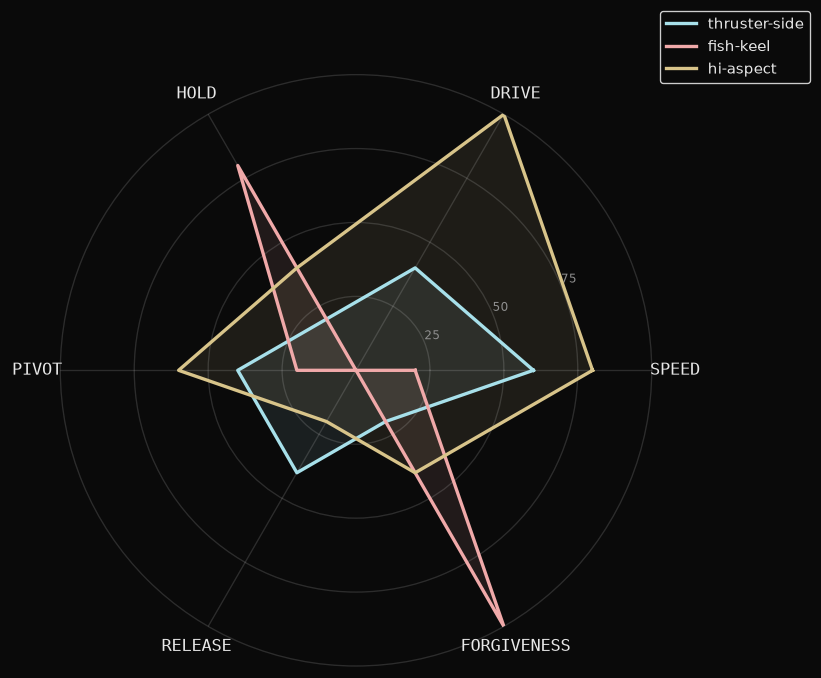
Tell it how you want to surf.
Six sliders: speed, drive, hold, pivot, release, forgiveness. That becomes the target the solver aims for.
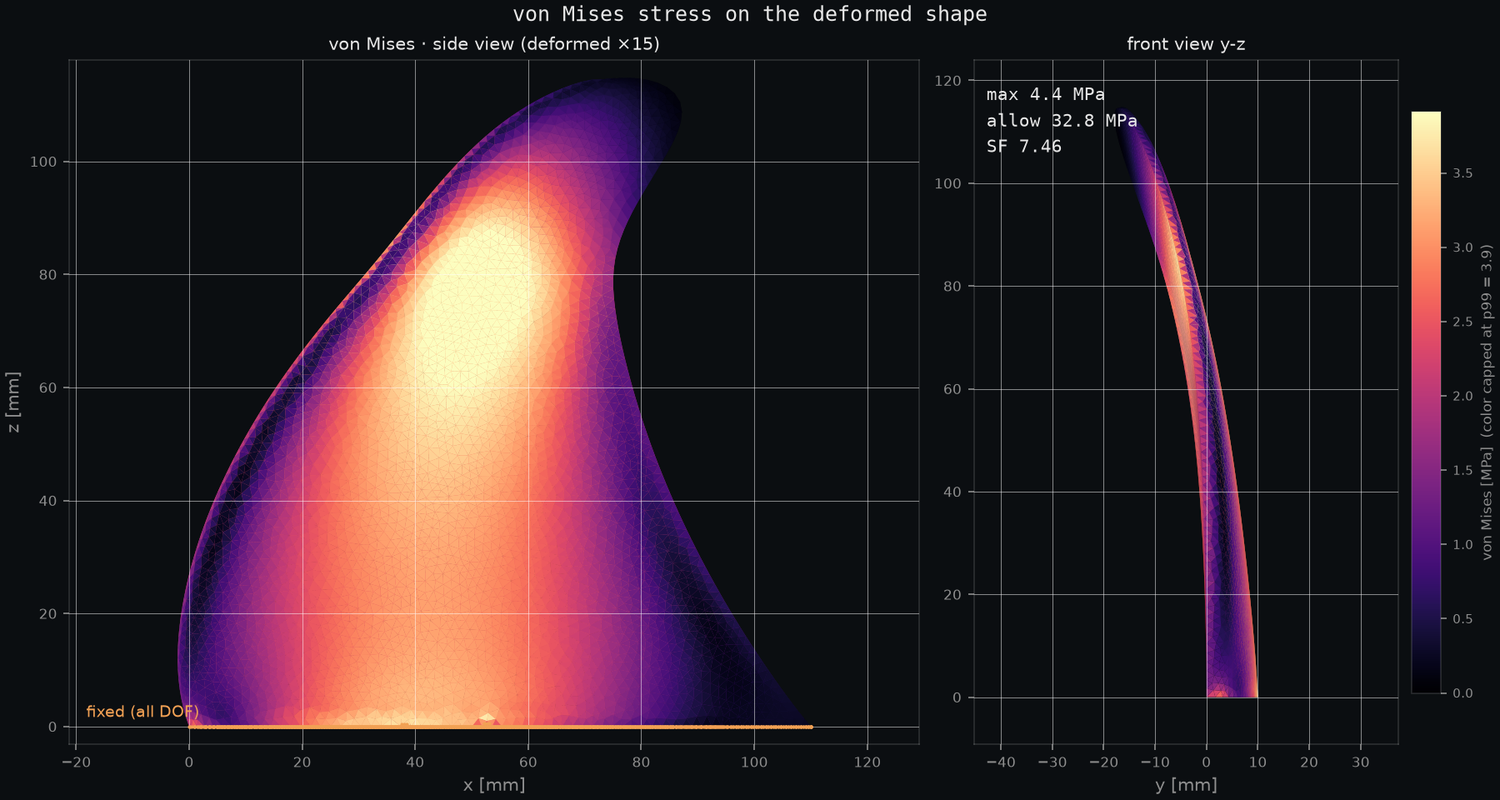
See where it's loaded.
The whole blade simulated under load, so you can see where the stress piles up and how far it is from letting go.
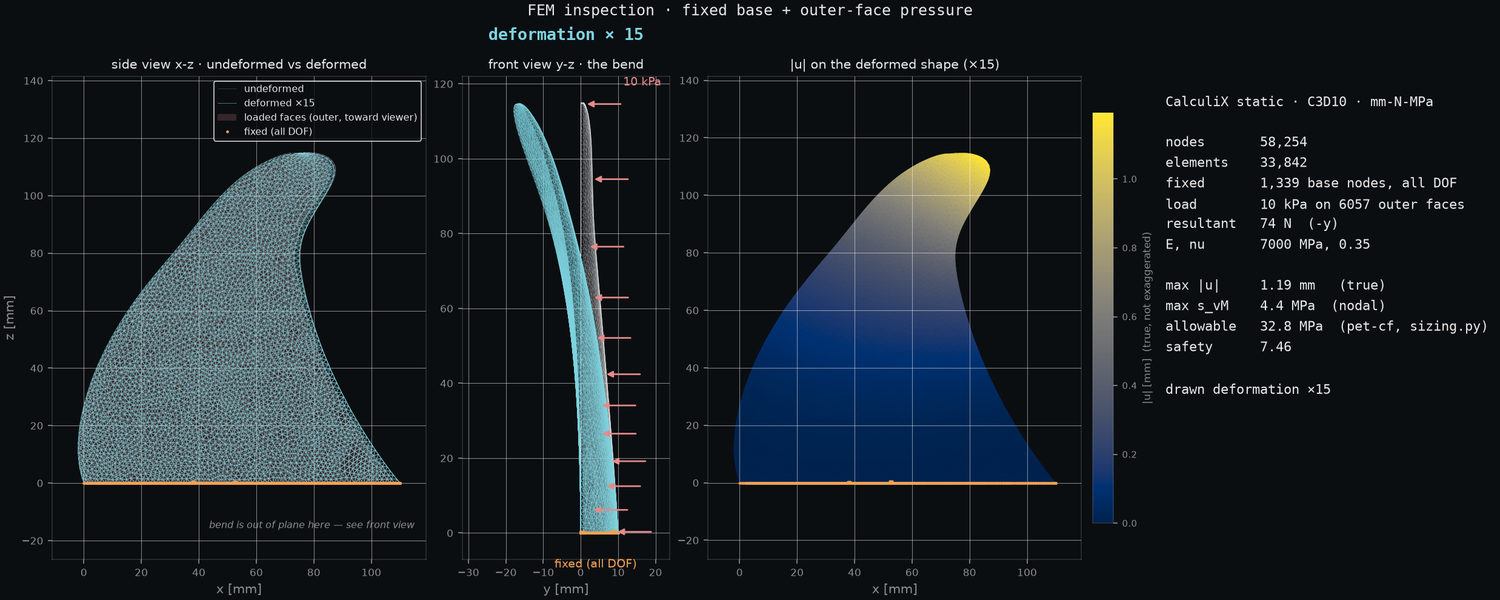
See how it flexes.
Flex isn't a flaw, it's a knob. The same model shows how the tip gives through a turn and how it springs back.

What this could be
If it actually works, a fin stops being a best-guess pick off a shelf. It gets worked out for one rider and one way of surfing.
- Built around a person, not a size bracket.
- Nudge one slider, get a new blade in minutes.
- Mess with it in the browser, print it at home, go ride.
The fin generator is free, and always will be. The CFD optimizer will cost a small fee once it's real, since running that much simulation eats serious compute. That, and we also like to go surfing.
We don't know if this works yet. The optimizer that turns your profile into a shape isn't hooked up. The sims are only checked against lab data from papers, not real surf, and nothing from here has been in the water. It's an experiment, out in the open. A proper writeup of the method is coming.
This whole thing leans heavily on AI. We're not here to sell you on AI vibe-coding, and we're not here to dunk on it either. It's a personal experiment to see what the current tools can actually do.
The interesting bit for us: solid scientific training, but zero hands-on CFD. So really this is a test of whether AI lets someone reason their way into an engineering field they've never touched. The heavy lifting was done by Opus 4.8 (1M context) and Fable.
If you do CFD for a living and want to poke at the sims, please get in touch, we'd genuinely love to hear what you think. Worst case, this project is a cautionary tale about how wrong AI can go (if we've fucked up the science majorly). Best case, it's a half-decent example of what's possible with it (if we somehow nailed it). Either way it's useful.